

The weeks after childbirth can be emotionally intense. Exhaustion, physical recovery, and the demands of caring for a newborn can make it difficult to know whether a new parent is going through an expected adjustment or needs more help.
Postpartum mental health concerns exist on a spectrum. The baby blues are common and usually short-lived. Postpartum depression and anxiety last longer and can interfere with daily life. Postpartum psychosis is rare, comes on quickly, and requires emergency care.
Understanding those differences can make the next step clearer. This guide explains what each experience may look like, when symptoms warrant a call to a provider, and when to seek help immediately.
Quick Read
- •Postpartum mental health concerns range from temporary mood changes to conditions that require professional or emergency care.
- •The baby blues typically begin 48–72 hours after birth as hormone levels shift and usually improve within about two weeks.
- •Postpartum depression and anxiety last longer, interfere with daily life, and respond well to treatment.
- •Postpartum psychosis causes a loss of contact with reality, requires immediate medical attention, and is treatable with prompt, appropriate care.
- •Providers consider symptom severity, safety risks, and available support when recommending a level of care.
- •Call 911 for signs of psychosis or immediate danger. Call or text 988 for urgent emotional distress or suicidal thoughts.
What Is the Postpartum Mental Health Spectrum?
The postpartum mental health spectrum describes the wide range of emotional and psychological experiences that can occur after childbirth. It extends from expected emotional adjustment and temporary baby blues to conditions such as depression, anxiety, OCD, PTSD, bipolar disorder, and postpartum psychosis.
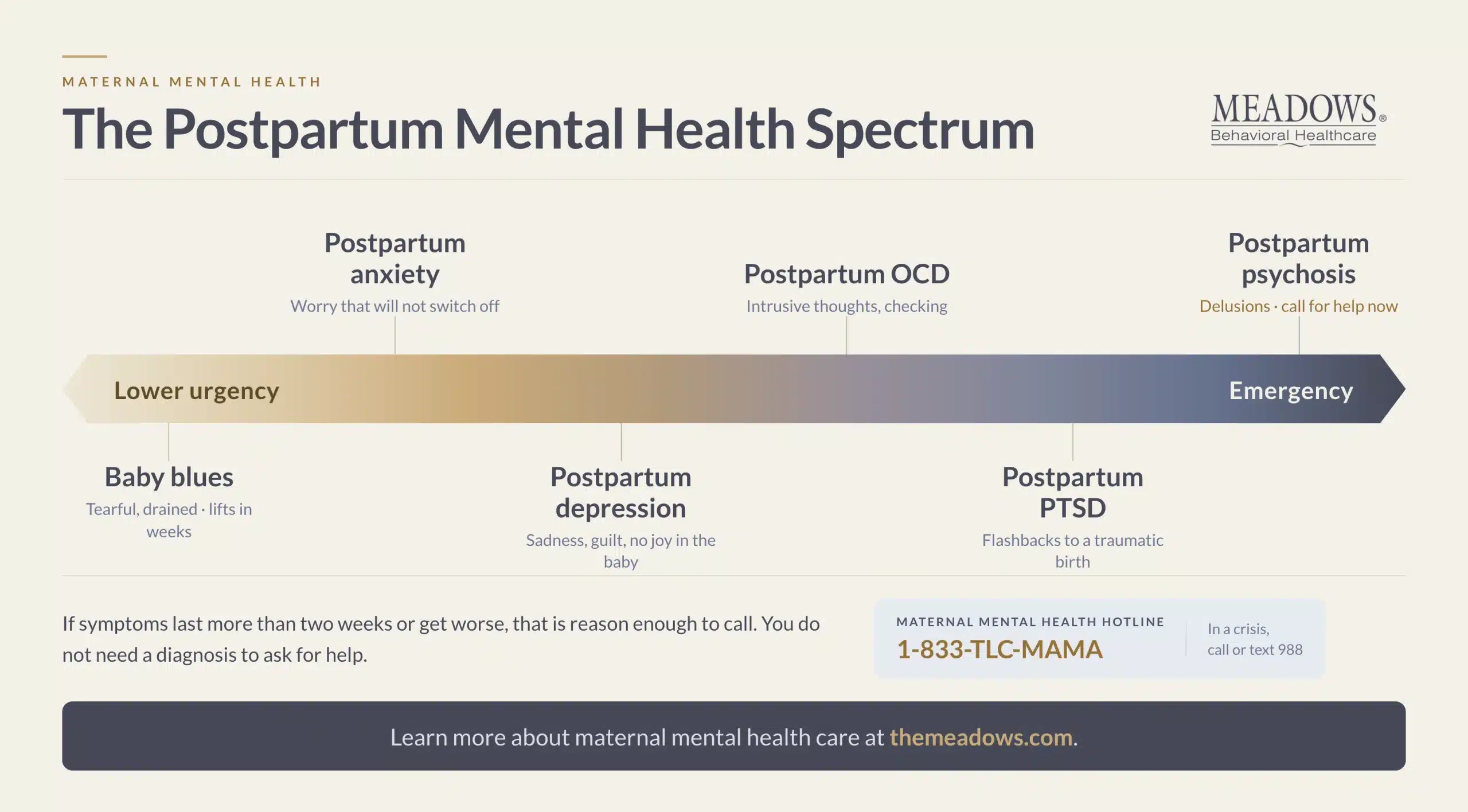
Although every experience is different, the spectrum commonly includes:
- Expected postpartum adjustment: Emotional changes, stress, disrupted sleep, and feeling overwhelmed can accompany the transition after childbirth.
- The baby blues: Mild sadness, worry, irritability, or tearfulness usually begins soon after birth and improves within about two weeks.
- Postpartum depression: Persistent sadness, hopelessness, guilt, exhaustion, or loss of interest can range from mild to severe.
- Postpartum anxiety and panic: Excessive worry, racing thoughts, physical tension, or panic attacks can become difficult to control.
- Postpartum OCD: Intrusive, unwanted thoughts that feel distressing or inconsistent with a person’s values may occur alongside repetitive behaviors intended to relieve anxiety.
- Postpartum PTSD: A frightening pregnancy, birth, medical complication, or postpartum experience can lead to lasting trauma symptoms.
- Other mental health conditions: The postpartum period can coincide with the onset, return, or worsening of bipolar disorder, eating disorders, substance use disorders, and other conditions.
- Postpartum psychosis: This rare psychiatric emergency can involve hallucinations, delusions, mania, paranoia, or severe confusion.
It’s important to note that “postpartum mental health spectrum” is a descriptive framework, not a formal diagnosis or a rigid scale from “mild” to “severe.” Conditions can overlap, and two people with the same diagnosis may experience very different symptoms, levels of distress, and effects on daily life.
These categories can help someone recognize when an experience has moved beyond a typical adjustment. They are not a substitute for an evaluation, however. A healthcare provider can assess the full pattern of symptoms and recommend the appropriate level of care.
How to Tell “Baby Blues” From a Postpartum Mental Health Disorder
The baby blues usually begin within the first few days after childbirth and improve within about two weeks. They may cause sadness, worry, irritability, or tearfulness, but the feelings are generally mild and temporary.
A postpartum mental health condition may last longer, feel more intense, or make daily life harder to manage. However, the two-week timeline is not a rule that someone must wait out. Symptoms that are severe, frightening, or quickly getting worse deserve attention at any point.
| Experience | Common Pattern | Recommended Next Step |
|---|---|---|
| Expected Adjustment | Difficult emotions come and go but remain manageable and gradually ease. | Continue monitoring and ask others for practical or emotional support. |
| Baby Blues | Mild sadness, worry, irritability, or tearfulness begins soon after birth and improves within about two weeks. | Mention any concerns to a healthcare provider, especially if symptoms aren’t improving. |
| Possible Mental Health Condition | Symptoms are persistent, intense, worsening, or interfering with daily life. | Contact a healthcare provider for an evaluation. |
| Possible Emergency | The person loses contact with reality or may be unable to remain safe. | Call 911 or go to the nearest emergency room. |
These are general patterns rather than strict categories. If you or a loved one is struggling mentally or emotionally in postpartum, you do not need to wait two weeks to ask for help if symptoms are intense, frightening, or making it difficult to function.
Common Postpartum Mental Health Conditions
Postpartum mental health conditions can overlap, and the same condition may look different from one person to another. Someone may also experience more than one condition at the same time.
Postpartum Depression
Postpartum depression may involve persistent sadness, hopelessness, guilt, anger, emotional numbness, or a loss of interest in things that once felt enjoyable. Some people have difficulty feeling connected to the baby, while others feel connected but still struggle with depression.
Symptoms can range from mild to severe. They may begin during pregnancy or emerge in the weeks or months after childbirth.
Postpartum Anxiety and Panic
Postpartum anxiety can cause ongoing worry, racing thoughts, physical tension, or a persistent feeling that something bad is about to happen. Some people repeatedly check on the baby or find it difficult to rest even when the baby is safe and someone else is available to help.
Panic attacks can also occur. These are sudden episodes of intense fear that may include a racing heart, dizziness, shortness of breath, nausea, or a feeling of losing control. Anxiety often occurs alongside postpartum depression, but it can also occur on its own.
Postpartum OCD
Postpartum OCD may involve repeated, unwanted thoughts or mental images, often related to the baby’s safety. A person may respond by checking repeatedly, avoiding certain situations, seeking reassurance, or following rigid routines intended to reduce fear.
Intrusive thoughts can be disturbing, but having one does not automatically mean someone wants to act on it. With postpartum OCD, people typically recognize that the thoughts are unwanted and inconsistent with what they want.
These thoughts should still be discussed with a qualified provider, especially when they are frequent or disrupting daily life. If someone believes they may act on a harmful thought or cannot remain safe, urgent help is needed.
Postpartum PTSD
Postpartum PTSD can develop after a frightening pregnancy, birth, pregnancy loss, medical complication, or postpartum experience. Symptoms may include nightmares, unwanted memories, avoiding reminders of what happened, feeling constantly alert for danger, or becoming distressed around medical settings.
A birth does not have to appear traumatic to someone else for it to have a lasting emotional effect. Trauma is shaped by how the person experienced the event, not only by what appears in the medical record.
Bipolar Disorder and Other Mental Health Conditions
The postpartum period can coincide with the onset, return, or worsening of bipolar disorder, eating disorders, substance use disorders, and other mental health concerns.
Bipolar disorder may involve episodes of depression as well as periods of mania or hypomania. These periods can cause unusually elevated or agitated moods, racing thoughts, impulsive behavior, and a reduced need for sleep. This is different from feeling exhausted because a newborn is interrupting sleep.
A full evaluation can help identify whether new symptoms are related to postpartum depression, another condition, or several concerns occurring together.
Postpartum Psychosis Is a Medical Emergency
Postpartum psychosis is rare, but it requires immediate medical care. It can come on quickly and affect a person’s ability to understand what is real.
Possible signs include:
- Hallucinations, such as seeing or hearing things that are not there
- Delusions, or firmly held beliefs that are not based in reality
- Severe confusion or disorientation
- Paranoia or extreme suspicion
- Mania, agitation, or rapidly changing behavior
- Speech or behavior that becomes difficult to follow
A person experiencing psychosis may not realize that something is wrong. Call 911 or go to the nearest emergency room if postpartum psychosis may be present. Postpartum psychosis generally requires hospitalization, but recovery is possible with prompt care.
What Levels of Postpartum Mental Healthcare Are Available?
Someone does not need to know what diagnosis they have or what level of care they need before asking for help. If postpartum symptoms are causing distress, they deserve to be taken seriously.
Postpartum mental healthcare can take several forms:
- Inpatient care provides 24-hour care and monitoring in a hospital or treatment facility.
- Intensive outpatient programs provide a structured schedule of mental health services without requiring an overnight stay. They are a step below inpatient care but offer more support than standard outpatient appointments.
- Traditional outpatient care may include regularly scheduled appointments with a therapist, psychiatrist, or other mental health provider.
- Individual therapy gives someone a private setting to discuss symptoms, emotions, relationships, and recent experiences.
- Support groups and peer support connect new parents with others who have faced similar concerns.
These forms of care are not rigid stops along one path. Someone may use more than one, move between them, or receive a different recommendation as their needs change. Speaking with a professional can help determine what kind of care makes sense without expecting the person to make that decision alone.
How to Ask for Help With Postpartum Mental Health
Someone does not need to know what condition they may have or what type of care they need before reaching out. They can start by describing what has changed, how long it has been happening, and how it is affecting daily life.
It may help to say:
- “I haven’t felt like myself since giving birth.”
- “These feelings are getting harder to manage.”
- “I’m having thoughts that are frightening me.”
- “I’m struggling to sleep, eat, or complete basic tasks.”
- “I think I need help with my mental health.”
A new parent can share these concerns with a healthcare or mental health provider. Writing down symptoms beforehand or asking a trusted person to join the conversation may make it easier.
Support Is Available
The National Maternal Mental Health Hotline also provides free, confidential support to pregnant and postpartum people and their families. Call or text 1-833-TLC-MAMA (1-833-852-6262) at any time.
Call or text 988 for urgent emotional distress or suicidal thoughts. Call 911 or go to the nearest emergency room for signs of postpartum psychosis or immediate danger.
How Loved Ones Can Help
Partners, relatives, and friends may notice changes before the person experiencing them recognizes the pattern. Helpful responses can include:
- Listening without dismissing, correcting, or judging
- Asking directly what kind of help would be useful
- Taking over specific tasks such as meals, laundry, transportation, or childcare
- Helping schedule and attend appointments
- Making space for uninterrupted sleep when possible
- Learning the warning signs of postpartum psychosis and suicide risk
- Taking statements about harm, hopelessness, or feeling unsafe seriously
Statements such as “everyone feels this way” or “try to enjoy this time” can make a struggling parent feel more alone. A better response is to acknowledge that something feels wrong and help connect the person with care.
FAQs About Postpartum Mental Health
1. What is the difference between postpartum depression and postpartum psychosis?
Present Postpartum depression is a mood condition that may cause lasting sadness, anxiety, numbness, or difficulty functioning. Postpartum psychosis causes a loss of contact with reality, which may involve hallucinations, delusions, or severe confusion. It is a medical emergency.
2. How soon after birth do these conditions start?
The baby blues usually begin within a few days of delivery. Postpartum depression may start during the first weeks after birth or emerge later. Postpartum psychosis tends to develop suddenly, most often within the first two weeks.
Although many symptoms begin within the first several weeks, depression and other mental health concerns can emerge months after childbirth. Symptoms may also begin during pregnancy and continue postpartum.
3. Can the baby blues turn into postpartum depression?
Symptoms that last beyond two weeks, become more intense, or begin to interfere with daily life may indicate postpartum depression rather than the baby blues. A provider can evaluate the symptoms and clarify what kind of help is appropriate.
4. Can postpartum depression turn into psychosis?
Postpartum depression and postpartum psychosis are separate conditions, and most people with postpartum depression do not develop psychosis. Any new hallucinations, delusions, severe confusion, or other signs of losing touch with reality require emergency care.
5. Are Intrusive Thoughts the Same as Postpartum Psychosis?
No. Intrusive thoughts are unwanted and usually distressing to the person experiencing them. Psychosis involves a loss of contact with reality, which may include hallucinations or firmly held false beliefs. Because these experiences can be difficult to sort through alone, concerning thoughts should be discussed with a qualified provider.
6. Can Someone Develop Postpartum Psychosis Without a History of Mental Illness?
Yes. A history of bipolar disorder, psychosis, or postpartum psychosis increases the risk, but the condition can occur without a known history. Any signs of psychosis after childbirth require immediate medical care.
Get Help for Postpartum Mental Health Concerns
The first conversation can be the hardest part of getting help. A healthcare provider can help make sense of the symptoms, identify any immediate risks, and determine the appropriate level of care.
The Meadows provides whole-person mental health treatment that addresses the concerns someone is facing alongside the experiences that may be contributing to them. If you or someone you love is struggling after childbirth, contact us to learn more about our treatment options.