

Clinical Outcomes
Lasting recovery supported by real results.
Our 2024 Annual Outcomes Report is now available!
Highly Rated, Highly Effective
For nearly 50 years, The Meadows has led in trauma, addiction, and mental health treatment. We combine evidence-based therapies, modern neuroscience, and a whole-person approach to help patients heal and thrive. Our outcomes, independently validated by Vista Research Group, track patients across all programs, from intake through treatment and up to one year post-treatment, showing how expertise, individualized care, and community create lasting, measurable results.
We focus on patient-reported well-being, engagement, satisfaction, quality of life, progress on personal goals, symptom reduction, and abstinence to capture the full impact of lasting recovery and life transformation.

Life Improvements Above Industry Norms
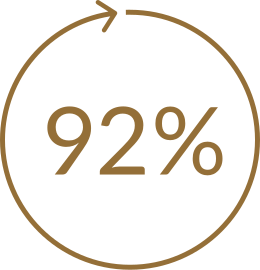
92% of patients Report feeling excellent, good, or fair 1 year Post-Treatment compared to 35% at Intake.
Improved Quality of Life
Treatment success is best measured by patient-reported well-being.
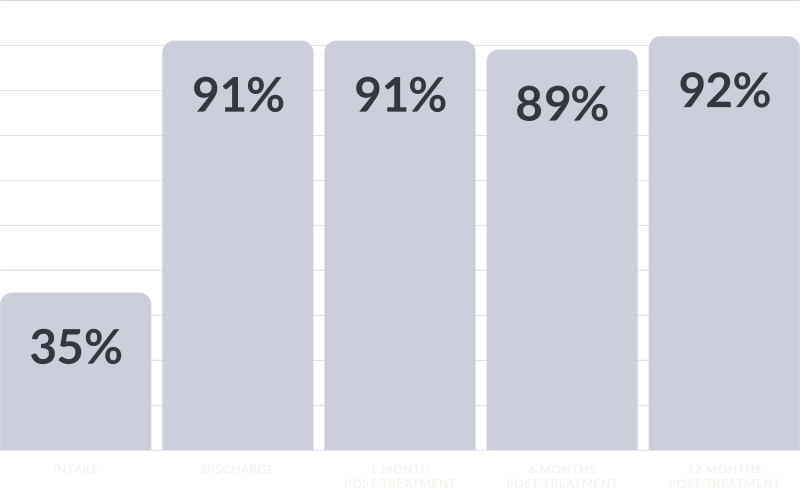
Recovery is not just about healing, it is about thriving. Patient-reported well-being is the most meaningful measure of treatment success. MBH patients consistently exceeded Vista industry norms for overall feeling at every post-treatment follow-up, demonstrating the lasting impact of our programs, true life transformation, and sustainable recovery and well-being.
Overall Feeling
Patients reachable feeling excellent, good, or fair
Progress on Personal Goals
Patients also experience meaningful improvements in quality of life and progress on personal goals one year post-treatment highlighting the lasting impact of whole-person care.
12 Months Post-Treatment

97% Living in stable housing

94% Report good relationship with close family

77% Employed or in school
The Power of Feeling Heard and Supported
The power of feeling seen, heard, and supported is evident in our strong patient satisfaction rates and Net Promoter Score. Individual and group therapy play a central role in our approach, finding connection, addressing trauma, and fostering resilience.
Patient Satisfaction
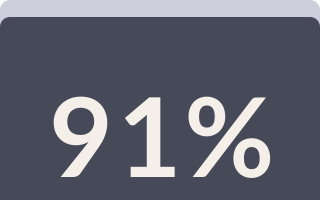
All Inpatient Programs
91% of patients feel satisfied with the treatment they are receiving.
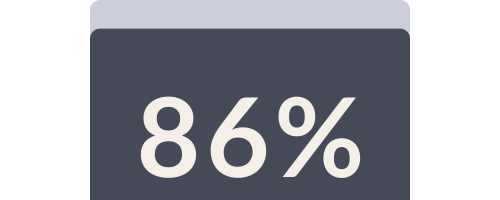
All Outpatient & VIOP Programs
86% of patients feel satisfied with the treatment they are receiving.

The Role of Therapy: Individual & Group
78%
Individual Therapy
78% Reported very or extremely helpful
71%
Group Therapy
71% Reported very or extremely helpful
Patient feedback underscores how community fosters engagement, growth, and sustained change.
“My group ended up being the key to the whole experience, the central part of my experience here, and the most meaningful part of my experience here. Hearing other people in addiction and recovery helped me open and explore these things that had been bottled up for so long.”
JADON
The Meadows Outpatient Center
Recovery isn’t linear, and our continuum of care supports patients wherever they are, with healing that fits.
For inpatient programs, longer stays and high completion rates, and for outpatient programs, consistent attendance, reflect active engagement and commitment to treatment.
Completion and Attendance RateS
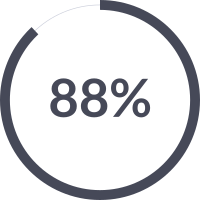
Inpatient Treatment Completion rate
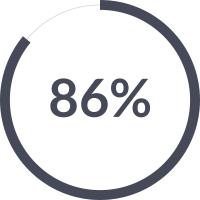
Outpatient Treatment ATTENDANCE Rate
Recovery that Lasts
The measurable impact of personalized, trauma-focused care
Post-treatment abstinence rates above industry average
Patients with moderate to severe substance use disorders maintain abstinence long after treatment. Percentages reflect the rates of patients who were reachable.
Because addiction is a chronic disease, Vista defines success for substance use disorder patients as maintaining at least 30 days of abstinence.
1 Month
72% Abstinent since treatment
6 Months
78% Abstinent last 30 days
12 Months
88% Abstinent last 30 days
The Meadows Expert Approach Focused on Healing Core Issues Supports Lasting Recovery from Substance Use Disorders
“What led me to The Meadows was realizing that I was so unhappy with my life that I tried to drink myself to death. You literally just have to surrender and give The Meadows a chance because they’re not telling you a way. They’re basically teaching you to open your eyes and just realize that there are a million different ways to look at life, and you don’t need to look at it the way you’ve been looking at it, that’s got you into this deep dark hole you’re in today.”
David
The Meadows Alumni
Significant, Lasting Decrease in Symptoms
Our approach gets to the root of the problem for long-term recovery. By discharge, patients feel noticeably better — with progress continuing in follow-ups.
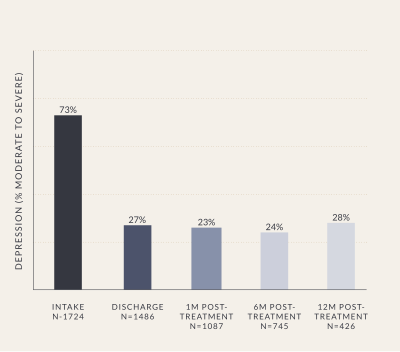
Decrease in Symptoms of Depression
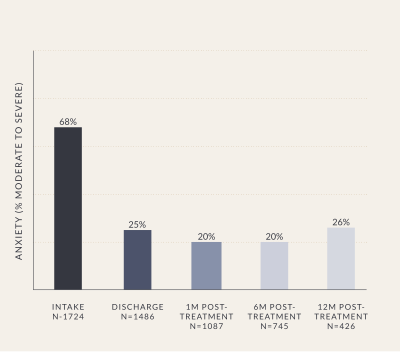
Decrease in Symptoms of Anxiety
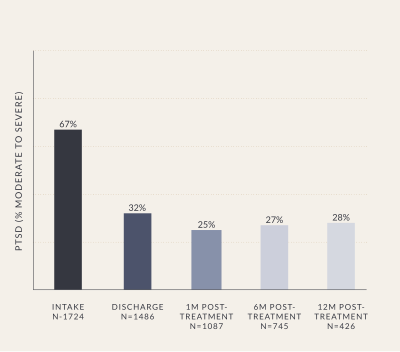
Decrease in symptoms of PTSD
Our 2024 Annual Outcomes Report is now available!
Measuring What Matters
How We collect Data:
We use Vista Research Group for independent, third-party research that measures the effectiveness of our programs. Their platform provides real-time patient monitoring and long-term follow-up data, allowing us to evaluate outcomes with transparency and accuracy. These insights help us continuously improve care, demonstrate effectiveness, and build trust with patients, loved ones, providers, and payers.

About This Data:
About This Data
Patient Satisfaction
N = 20,089 monitoring surveys through 2024; scores below take an average of all surveys.
All Inpatient
- 91% of patients feel satisfied with the treatment they are receiving.
All Outpatient & VIOP
- 86% of patients feel satisfied with the treatment they are receiving.
All Meadows Programs – Post Discharge Satisfactions
Among patients who submitted surveys between 8/19/2022- 12/31/2024.
- 1 mo post (n = 1,088): 86% somewhat or very satisfied
- 6 mos post (n = 745): 86% somewhat or very satisfied
- 12 mos post (n = 426): 85% somewhat or very satisfied
Improved Quality of Life
All Meadows Programs
Overall Feeling Post-Treatment
1 Month Post-Treatment
Among 1,682 patients discharged between 8/19/2022-12/31/2024, 65% were reachable at 1 month post-treatment (n = 1,093).
-
of patients who were reachable, 91% (n = 992) were feeling excellent, good, or fair
6 Months Post-Treatment
Among 1,315 patients discharged between 8/19/2022- 7/31/2024, 57% were reachable at 6 months (n = 749).
- Of patients who were reachable, 89% (n = 670) were feeling excellent, good, or fair
12 Months Post-Treatment
Among 840 patients discharged between 8/19/2022- 1/31/2024, 51% were reachable at 12 months (n = 428).
- Of patients who were reachable, 92% (n = 395) were feeling excellent, good, or fair
Increased from 94% at start of treatment to 97% one year after discharge
This is a 3.19% increase in patients living in stable housing.
Living in Stable Housing (n = 421 patients):
- Increased from 94% at start of treatment to 97% one year after discharge
- This is a 3.19% increase in patients living in stable housing.
Good Relationship with Closest Family Members (n = 421 patients):
- 69% reported excellent, good, or fair at start of treatment, increasing to 94% one year post-treatment.
- This is a 36.23% increase in good relationship with closest family members.
Employment (n = 421 patients):
- 73% reported working, going to school, or working in the home at the start of treatment, increasing to 77% one year post-treatment.
- This is a 5.47% increase in employment
SUD Abstinence Rates
Of the 1,722 patients who were discharged from The Meadows on or before December 31, 2024, 52% reported having had at least 4 of the 11 DSM-5 symptoms of substance use disorder (SUD) in the year prior to entering treatment. Those who met the criteria for having at least a moderate SUD were asked about their drug and alcohol use on each of the follow-up surveys.
Because addiction is a chronic disease and relapse a common occurrence, Vista considers having been abstinent for at least the last 30 days to be a key measure of success for patients with substance use disorders.
1 Month Post-Treatment
Among 882 patients discharged between 8/19/2022-12/31/2024, 61% were reachable at 1 month (n = 538).
- Of patients who were reachable, 72% were abstinent since treatment (n = 388)
6 Months Post-Treatment
Among 672 patients discharged between 8/19/2022- 7/31/2024, 53% were reachable at 6 months (n = 356).
- Of patients who were reachable 6 months post treatment, a total of 78% were abstinent in the last 30 days
- 60% (n = 215) were abstinent since treatment
- 18% (n = 67) were abstinent the last 30 days
12 Months Post-Treatment
Among 410 patients discharged between 8/19/2022- 1/31/2024, 45% were reachable at 12 months (n = 184).
- Of patients who were reachable 12 months post-treatment, a total of 88% were abstinent in the last 30 days
- 53% (n = 98) were abstinent since treatment
- 35% (n = 65) were abstinent the last 30 days
Depression Symptoms
All Meadows Programs – 2024 Progress During Treatment
n = 3,774
Depression (PHQ-9):
- Patients reporting Moderate to Severe Depression symptoms decreased from 74% at intake to 26% at discharge.
-
This is a 64.86% decrease in depression symptoms reported.
-
Impact of Treatment on Lasting Symptom Reduction – Patients Reporting Moderate to Severe Depression (PHQ-9) Symptoms:
For patients discharged between 8/19/20222 – 12/31/24; Patient submitted surveys received by 1/31/25.
- Intake – 73% (n=1724)
- Discharge – 27% (n=1486)
- 1 month post-treatment – 23% (n=1087)
- 6 months post-treatment – 24% (n=745)
- 12 months post-treatment – 28% (n=426)
Anxiety Symptoms
All Meadows Programs – 2024 Progress During Treatment
n = 3,774
Anxiety (GAD-7):
- Patients reporting Moderate to Severe Anxiety symptoms decreased from 69% at intake to 25% at discharge.
-
This is a 63.76% decrease in anxiety symptoms reported.
-
Impact of Treatment on Lasting Symptom Reduction – Patients Reporting Moderate to Severe Anxiety (GAD-7) Symptoms:
For patients discharged between 8/19/20222 – 12/31/24; Patient submitted surveys received by 1/31/25.
- Intake – 68% (n=1724)
- Discharge – 25% (n=1486)
- 1 month post-treatment – 20% (n=1087)
- 6 months post-treatment – 20% (n=745)
- 12 months post-treatment – 26% (n=426)
PTSD Symptoms
All Meadows Programs – 2024 Progress During Treatment
n = 3,774
PTSD (PCL-6):
- Patients reporting PTSD symptoms decreased from 67% at intake to 31% at discharge.
-
This is a 53.73% decrease in PTSD symptoms reported.
-
Impact of Treatment on Lasting Symptom Reduction – Patients Reporting PTSD (PCL-6) Symptoms:
For patients discharged between 8/19/20222 – 12/31/24; Patient submitted surveys received by 1/31/25.
- Intake – 67% (n=1724)
- Discharge – 32% (n=1486)
- 1 month post-treatment – 25% (n=1087)
- 6 months post-treatment – 27% (n=745)
- 12 months post-treatment – 28% (n=426)
Found Therapy Helpful
All Meadows Programs
n = 3,423 patients surveyed in 2024.
Individual Therapy
- 71% reported very or extremely helpful
Group Therapy
- 78% reported very or extremely helpful
Treatment Completion
N = 3,750 patients discharged in 2024.
All Meadows Programs
- 74% of patients across all Meadows programs completed all recommended treatment.
All Inpatient
- Our inpatient programs have an 88% completion rate.
All Outpatient & VIOP
- 73% of outpatient and viop patients complete all recommended treatment or are refeRred to a higher level of care.
Outpatient Attendance
N=2,479 outpatient patients were discharged in 2024.
Attendance Rate
- Outpatient programs had a combined attendance rate of 86%.
- In-Person Outpatient: 87%
-
- Virtual Outpatient: 85%
-
- Adolescent Outpatient: at 80%
Meaningful Change Starts With The Meadows Approach to Care
Our approach is built on a comprehensive, integrated system supported by seven Pillars of Care: The Meadows Legacy, Senior Fellows, Healing That Fits, Comprehensive Psychiatric and Medical Care, Neuroscience Integration, Family and Community Connection, and The Meadows Model. Each pillar works together to bring the Meadows Model to life, grounding every level of care in clinical expertise, compassionate connection, and a treatment experience designed to support meaningful, lasting healing.


Long-Term Recovery Starts Here
Real results begin with the right treatment. Let us help you or your loved one create a healthier, more fulfilling life. Contact our admissions team today.